Tennis Elbow
Tennis elbow, also known as lateral epicondylitis or lateral elbow pain, is one of the most common causes of pain on the outside or the elbow. It affects the common extensor tendon in the forearm, which functions to hold the wrist still during gripping and hand functions. People of any age can get Tennis elbow but it mainly affects people between the ages of 40 and 60 with males and females equally affected.
It is usually caused by overload/overuse of the muscles and tendons near the elbow joint. It is more prevalent in roles that involve repeated tasks. The main symptoms are pain on the outside of the elbow and into the forearm when gripping, twisting, or lifting the arm.
Risk factors for Tennis elbow include smoking, obesity, repetitive tasks and sports such as golf, tennis, bowling.
Tennis elbow is generally a self-limiting condition, although duration of symptoms can vary between several weeks and several months.
Advice to help manage your symptoms:
- A short period of rest from aggravating activities will allow symptoms to settle. Modify your activities to avoid excess gripping or lifting. If this isn’t possible then try taking regular breaks from aggravating activities
- If having to lift, keep your elbows close to your body and carry with palm facing upwards.
- Wearing an epicondyle clasp has proven useful in some cases to offload the tendon during aggravating activities
- Use a cold compress, such as a bag of ice wrapped in a damp towel over the painful area. Leave for 15mins, checking the skin regularly. Repeat this 3-4 times per day.
- Using pain relief such as Paracetamol, Ibuprofen or Ibuprofen gel may help to reduce the pain at your elbow and allow your preform exercises properly. Do not exceed the daily allowance of these medicines and consult your GP/Pharmacist if considering starting a new pain medication
- Reduce/quit smoking – it is thought that smoking can interfere with circulation to tendons, meaning they are at increased risk if injury.
- Weight loss – being overweight can increase the number of inflammatory molecules in the body which can lead to local and systemic inflammation within the body and therefore poorer healing and resolution of pain.
- Injections are noted to provide short term benefit for pain; however they do not resolve the underlying tendon issue and long term they have poor outcomes and relapses of pain are very common, with associated risk of tendon rupture following steroid injections.
- Surgery is only considered in extremely severe and persistent cases of Tennis Elbow and only when conservative measures have not been effective.
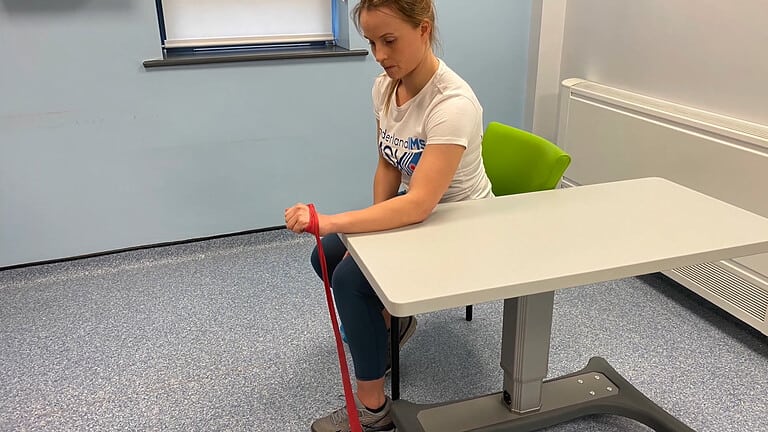
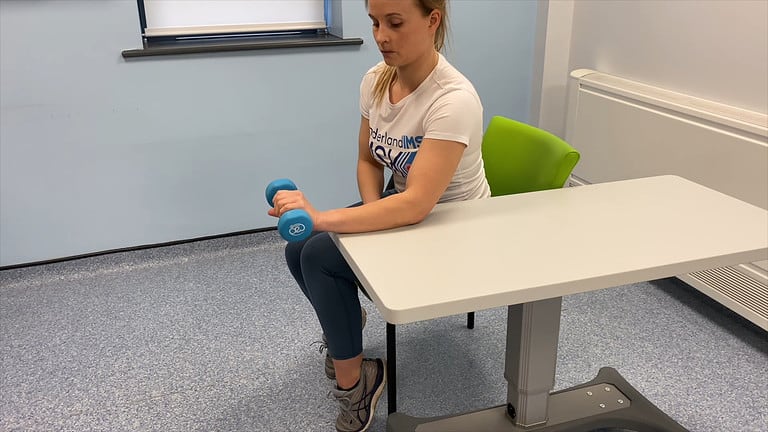
- Exercises are important to keep your arm moving and prevent the elbow becoming stiff and weak. A progression of loading exercises are required, which can be accessed here or can be downloaded from the right hand side of this page.